
What casino chips are and why casinos deal in them
Most chip decisions come down to one question: do you want your stake to be a physical object or an account line? A chip in your pocket can be lost, but only to you, and it cannot be topped up without a trip to the cage. An online balance can be adjusted in a second, which is convenient but removes the natural pause between deciding to spend and spending. For anyone who wants that pause to stay in place, physical chips have an advantage that has nothing to do with the game. The chip is a stop sign. You feel it leave your hand. Digital balances work well for players who prefer convenience and logged activity, and physical chips suit those who find the counting itself useful.
What casino chips are and why casinos deal in them
A chip is essentially a promissory note redeemable only at the issuing casino’s cage. Its purpose extends beyond simple currency replacement; it serves as a tool for risk control and operational efficiency. Cash creates liability issues for venues holding millions in floating funds. By requiring players to exchange money for chips upon entry, casinos centralize financial handling and simplify auditing processes. This conversion step ensures that every wager leaves a traceable record within the house ledger.
Standardisation drives the system. In most jurisdictions, colour codes follow consistent patterns: white for low-value units, red for mid-range stakes, green for higher denominations, and black or purple for premium play. These conventions help dealers spot irregularities quickly. If a player stacks purple chips alongside blue ones without explanation, staff can intervene before potential disputes escalate. Material quality also varies. Clay-composite chips remain popular in high-end rooms due to their heft and sound when clacked together, signalling quality to experienced players. Plastic alternatives dominate budget-friendly venues where cost savings outweigh sensory preferences.
Online platforms replicate this logic digitally. When you log in to a desktop version of an online casino, your real-money balance converts into virtual credits automatically. There is no intermediate physical object. This difference impacts how you perceive loss. Without the act of handing over weighted discs, digital deductions may feel less consequential, potentially leading to faster bankroll depletion. Recognising this psychological shift is critical for maintaining control over your gambling habits.
| Aspect | Live Floor Experience | Online Platform Interface |
|---|---|---|
| Transaction Speed | Immediate hand-to-hand exchange; chips move physically across the felt. | Instant server-side updates; no latency in placing bets after confirmation. |
| Psychological Impact | Tangible weight reinforces awareness of expenditure per round. | Abstract numbers may obscure the cumulative cost of consecutive losses. |
| Verification Method | Visual inspection of colour and edge markings confirms denomination. | Screen display shows exact numerical values tied to user account ID. |
Both formats aim to streamline gameplay, yet they engage different senses and cognitive responses. Choosing between them depends on whether you value the ritualistic aspects of table games or the streamlined accessibility of digital interfaces.
Operator comparison: operator details, games
Which payment methods a casino accepts, and how long a withdrawal takes to land, decide how smoothly your money moves in and out. That is the comparison worth making first, because no game library compensates for a payout that sits pending for days.
| Brand | Details |
|---|---|
| Spin Palace | HTML5 support; 300+ mobile games |
| Teambet | No confirmed AU licence; casino games offered unlawfully. |
| rocketplay29 australia | Operates under Curaçao licence with AUD support; bank transfers take 3–7 days. |
| Christchurch Casino | Physical NZ casino; no online gambling services. |
| Lolajack | AU-facing offshore casino; no local licence coverage. |
Read the credentials for Teambet in the context of the market they cover.
Spin Palace regulatory status
Spin Palace operates under a Malta Gaming Authority licence, not Australian regulation. Players depositing AUD face a 10-unit minimum and 50x wagering on bonus funds. Microgaming powers the 500+ game library, but the Interactive Gambling Act means local recourse is absent if disputes arise.
Teambet’s Regulatory Status in Australia
Teambet operates as an offshore entity without a confirmed Australian licence, placing it outside the protections mandated by the Interactive Gambling Act 2001. While the brand advertises access to over 800 slot games and live dealer tables alongside its sportsbook, these casino-style offerings cannot be legally provided to residents of Australia unless authorised by a state or territory regulator such as the Victorian Gambling and Casino Control Commission. Without this local authorisation, players have no recourse through Australian dispute resolution schemes, meaning funds held on the platform are not subject to strict segregation requirements or fair-play audits enforced by local authorities.
rocketplay29 australia: Curaçao Licensing and AUD Banking Limits
RocketPlay operates as a Curaçao-licensed hybrid platform combining fiat and cryptocurrency banking, meaning Australian players transact outside the protection of local state regulators. The site accepts AUD deposits starting at 30 dollars via Visa, Mastercard, Neosurf, or digital wallets like Bitcoin and Tether, but withdrawals through bank transfer can take up to seven business days compared to the few hours typical for crypto payouts. Standard accounts face a monthly withdrawal cap of approximately 15,000 to 20,000 AUD unless higher VIP tiers apply, and all real-money transactions require prior identity verification including proof of address and source of funds.
Christchurch Casino Is a Land-Based NZ Venue Without Online Offerings
Christchurch Casino is a land-based venue located in New Zealand, regulated under the Gambling Act 2003 by the New Zealand Gambling Commission. It does not offer real-money online gambling services to customers in Australia or elsewhere. Entry requires physical presence and valid photo identification, adhering to strict age restrictions and exclusion procedures that are enforceable only within the physical premises in Christchurch.
Best online blackjack casino | Real payout conditions
Australian Targeting Does Not Equal Local Licensing for Lolajack
Lolajack positions itself as an Australian-focused online casino, accepting deposits in AUD and featuring pokies-centric content tailored to local tastes. Despite this market targeting, the brand operates from offshore jurisdictions instead of under an Australian gaming licence. Players engaging with Lolajack do so within a regulatory grey zone, meaning that standard consumer safeguards available at licensed domestic bookmakers are not applicable to their accounts or transactions.
Colours, denominations and what chips are made of
Chip colour codes are conventions, not law. Many punters carry a rough mental map picked up from movies: white or blue for a dollar, red for five, green for twenty-five, black for a hundred. That scheme is common in parts of the United States, but there is no universal standard, and Australian casinos run their own designs and colourways under approval from the relevant state or territory regulator. Two venues in the same city can use different colours for the same value, and a colour that means $5 in one casino might mean $20 next door.
The only authority on a chip’s value is the denomination printed or moulded into the chip itself. Dealers and cage staff read the marking, not the colour, and so should you before stacking a bet. Edge spots, the striped patterns around the rim, help surveillance and staff identify denominations at a glance across a crowded layout, but they too are venue-specific design choices.
Construction matters more than most people realise. Modern casino chips are typically a clay composite or a ceramic disc, engineered for a consistent weight, usually somewhere around 8.5 to 11.5 grams, so stacks handle predictably and counterfeits feel wrong in an experienced hand. Cheap plastic chips from a supermarket set are noticeably lighter and slipperier. For very high denominations many casinos switch from discs to plaques: larger rectangular tokens that are harder to palm, easier to serialise and unmistakable on camera. A plaque is still just a chip in a different shape; the same redemption rules apply.
How casinos keep chips secure
A chip is effectively a bearer promise from the casino, so the venue invests heavily in making that promise hard to fake and easy to revoke. The defences stack up in layers. Artwork and moulds are unique to each venue, with fine detail that is difficult to reproduce. Many chips carry ultraviolet markings invisible in normal light but obvious under the cage’s UV lamp. Higher denominations are often serialised, so the casino knows exactly which $500 chips exist and where they should be.
The strongest modern layer is RFID: a tiny radio tag embedded in the chip that lets the casino read stacks electronically. With RFID a venue can count a table’s float in seconds, flag chips moving in unusual patterns and, critically, invalidate specific serial ranges. That is why stolen or found chips are unreliable to hold. If a cage is robbed or a batch goes missing, the casino can retire that design or blacklist those serials, and anyone wandering in weeks later with a pocketful of flagged chips gets questions instead of cash. Possession is not the same as value; the casino honours its chips on its own terms, backed by reconciliation counts that run every shift.
Teambet holds no licence from any Australian state or territory regulator, such as the NSW Independent Liquor and Gaming Authority or the Victorian Gambling and Casino Control Commission. Under the Interactive Gambling Act 2001, this means the platform cannot legally provide casino-style games to residents here. Depositing funds exposes you to significant risk because the operator falls outside local consumer protection frameworks.
Cashing in: the rules of the casino cage
The redemption mechanic is simple: you cash in casino chips at the issuing venue, full stop. Walk your chips to the cage, hand them over, and the cashier counts and converts them to cash. That transaction is the only place in the economy where the chip equals money. You cannot spend casino chips in the venue’s restaurant unless the casino expressly allows it, you cannot bank them, and no other casino, pub or shop is obliged to touch them.
Size changes the process. Small redemptions are routine, but large buy-ins and cash-outs attract identity checks under anti-money laundering and counter-terrorism financing obligations. Australian casinos are reporting entities, so a punter redeeming a substantial sum should expect to produce identification and, at higher thresholds, answer source-of-funds questions. That is not the casino being difficult; it is a legal condition of their licence, and refusing to cooperate can mean the transaction is declined or reported.
Timing matters too. Casinos periodically retire chip designs, usually with a notice period during which old chips remain redeemable at the cage. After the window closes, a retired chip is a collectible, worth whatever a buyer on the secondary market will pay, which may be less than face value. The same risk applies, more sharply, to a venue closure or rebranding. The practical rule follows directly: treat chips as a perishable claim on one business, and cash out before players walk out the door. Holding chips as souvenirs of a win is fine as long as you understand you have converted money into memorabilia.
Chips, pokies credits and online chips are different things
Australian punters often lump three different systems together because they all represent money in play. Venue pokies do not use table chips at all: they run on notes, ticket-in ticket-out vouchers, or carded cashless systems depending on the state and the venue. A TITO ticket is a printed claim on that venue’s system, redeemable at a kiosk or the cashier, and it usually carries an expiry condition printed on the ticket. It behaves more like a chip than cash does, but it is a distinct instrument with its own rules.
Online, the word chip means something weaker again. Balances and bonus chips on an online casino site are ledger entries in the operator’s database, governed by wagering terms instead of by a cage. A bonus chip typically cannot be withdrawn until you have bet a multiple of its value, and the terms cap what you can win from it. The regulatory position makes this sharper for Australians: the Interactive Gambling Act 2001 prohibits unlicensed online casino services from being offered to Australian residents. Offshore casino sites accessible from Australia are licensed, if at all, in foreign jurisdictions, so chip-style play there carries no Australian licence, no BetStop self-exclusion coverage and no local dispute pathway. If the operator refuses a withdrawal, your complaint goes to a foreign regulator or nowhere.
Social casino apps sit at the far end of the spectrum. The coins you collect or buy in a pokies-style app never convert to cash at any point. Money flows one way: you can purchase coins, you cannot redeem them. Because no prize of value is payable, these apps sit outside gambling regulation even though the mechanics mimic real pokies, which is exactly why they catch people out. The coins look like chips; the cash-out button does not exist.
Chips for home games and the ground rules
Material and Denomination Choices
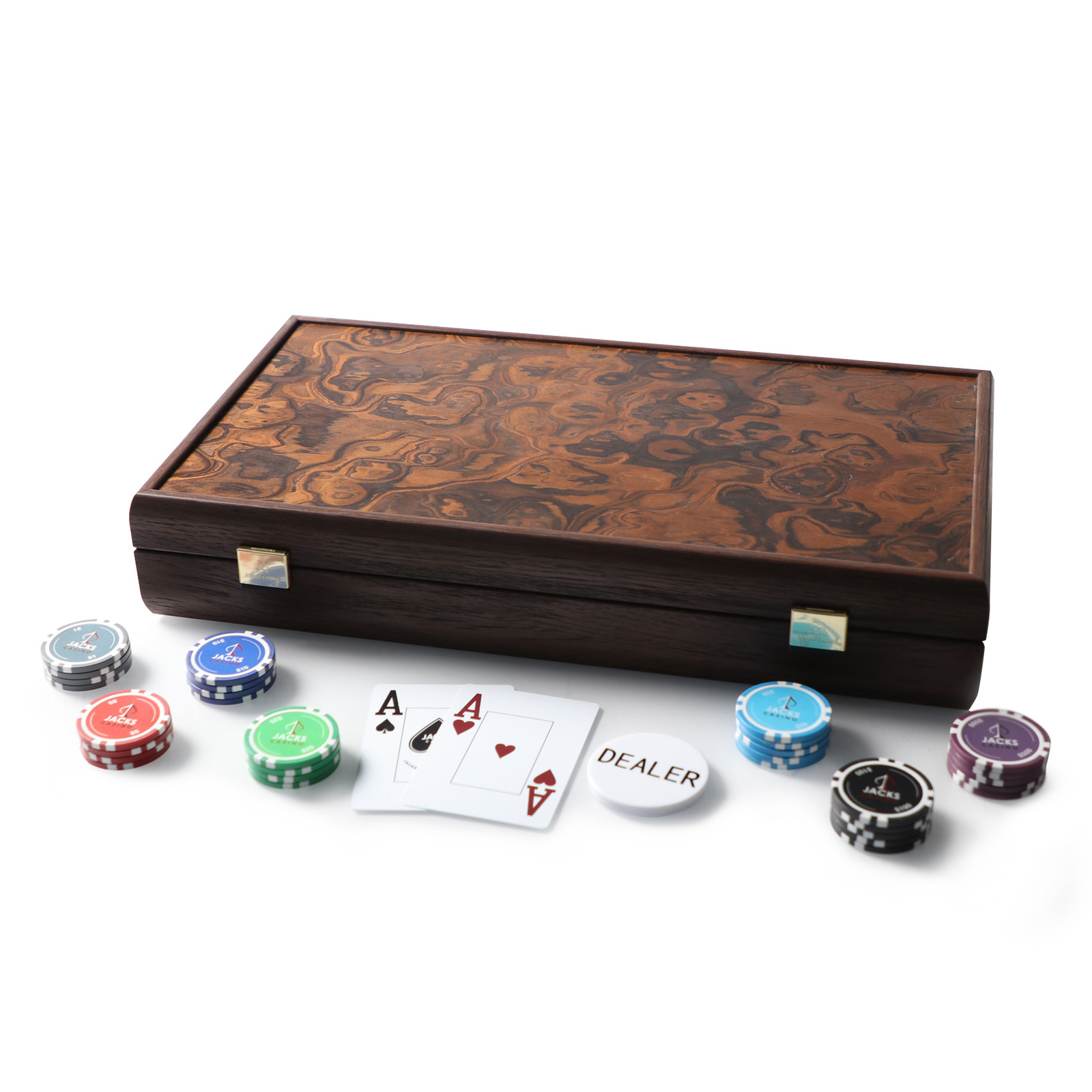
Home game chips come in two distinct tiers: clay-composite and ABS plastic. Clay-composite is a resin blend that mimics the weight and sound of casino-grade ceramic, offering a tactile experience closer to professional play. These typically cost more per set but provide better durability against chipping if dropped. ABS plastic remains the standard for casual entry-level sets due to its low price point and resistance to fading colours. For most home games, plastic suffices unless the group values the specific heft of high-end materials.
Spin samurai slots session breaks high variance control
The Rules of Home Chip Usage
Chips represent value only within the agreed framework of the game. Unlike casino currency, they hold no external redeemable worth. Establishing clear rules before dealing prevents disputes over cash equivalents. A common structure assigns fixed dollar values to colours, such as white for $1, red for $5, and green for $25. This simplifies payout calculations at the end of the session. Crucially, decide whether chips are bought with cash upfront or tracked on credit. Cash-only systems avoid IOUs and ensure everyone understands their risk exposure immediately. Mixing personal money with chip stacks creates confusion; keep funds separate in wallets until settlement.
Live dealer sections integrate Evolution Gaming streams, providing high-quality video feeds for blackjack and roulette. These tables operate separately from RNG games, requiring stable internet connections. Players can interact with croupiers in real time, adding a social element absent in automated versions.
Frequently asked questions
Can I withdraw my deposit if I haven’t used any bonus funds?
Yes. If you have claimed a welcome offer but not yet wagered the bonus, you can usually cancel it and withdraw your original deposit. The specific condition is that no part of the bonus balance has been used for bets. Once you place a wager with bonus money, the entire account balance often becomes subject to playthrough rules. To reverse this, look for a ‘Cancel Bonus’ option in your active promotions tab before making any bets. This clears the restriction and returns your funds to a withdrawable state immediately.
Do casino chips or physical tokens work at online casinos?
No. Physical casino chips are tangible tokens used in land-based venues. Online platforms operate entirely on digital account balances measured in currency units like Australian dollars. You cannot insert a physical chip into an online interface. Instead, you fund your digital wallet via bank transfer, credit card, or e-wallet. The concept of ‘chip value’ translates directly to your available cash balance, which you then use to place bets electronically.
Check chip purchase, refund and withdrawal conditions first
Physical casino chips hold no cash value outside the venue. Their refund and withdrawal conditions depend entirely on local rules, so checking these terms first prevents financial loss. A chip exchanged at a table cannot be returned to the cashier once removed from the gaming floor. Keep receipts for any purchases made directly at counters. If you plan to leave with unused tokens, ask staff about their specific return policy before placing your final wager.